Disclaimer: Please note that images or illustrations may differ from the actual products due to presentation reasons and are therefore non-binding. Technical changes and errors are excepted. For the most accurate information, contact our customer service team.
Leister VACUUM BELL Weld Seam Leak Testing Device

In Stock
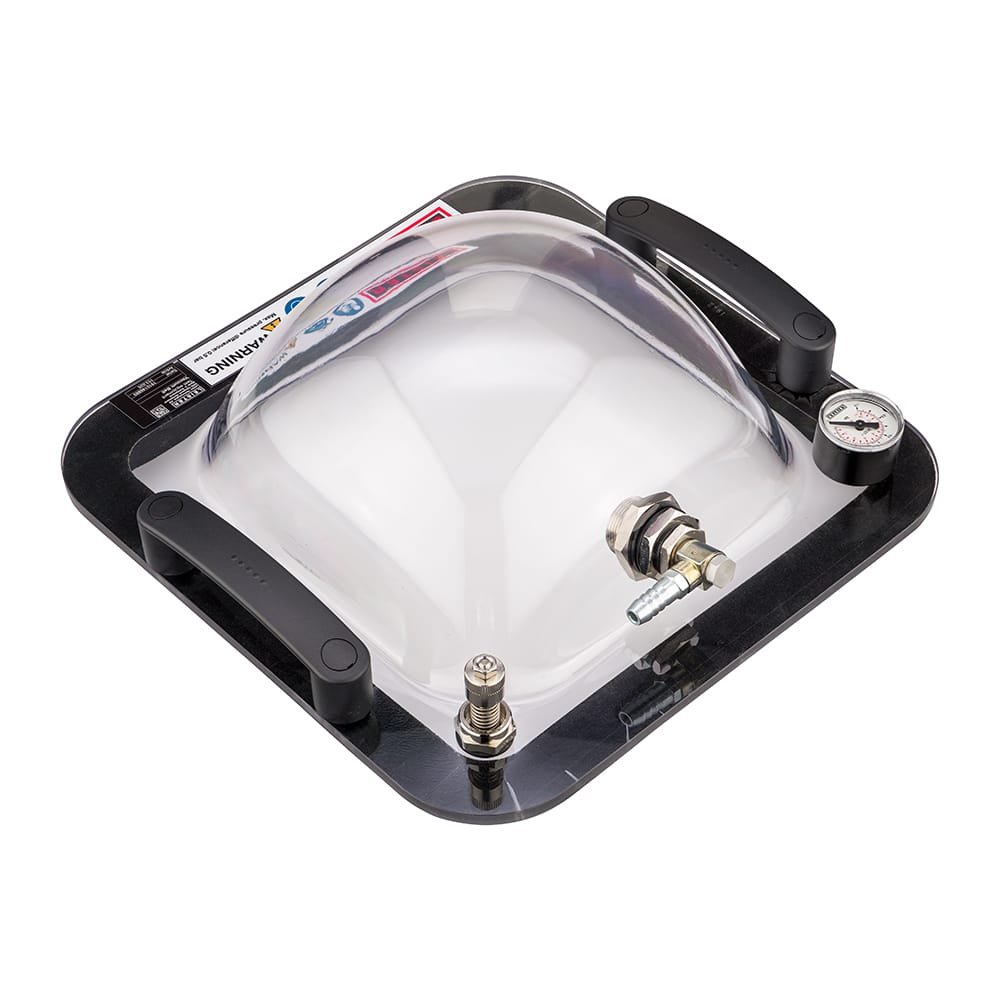
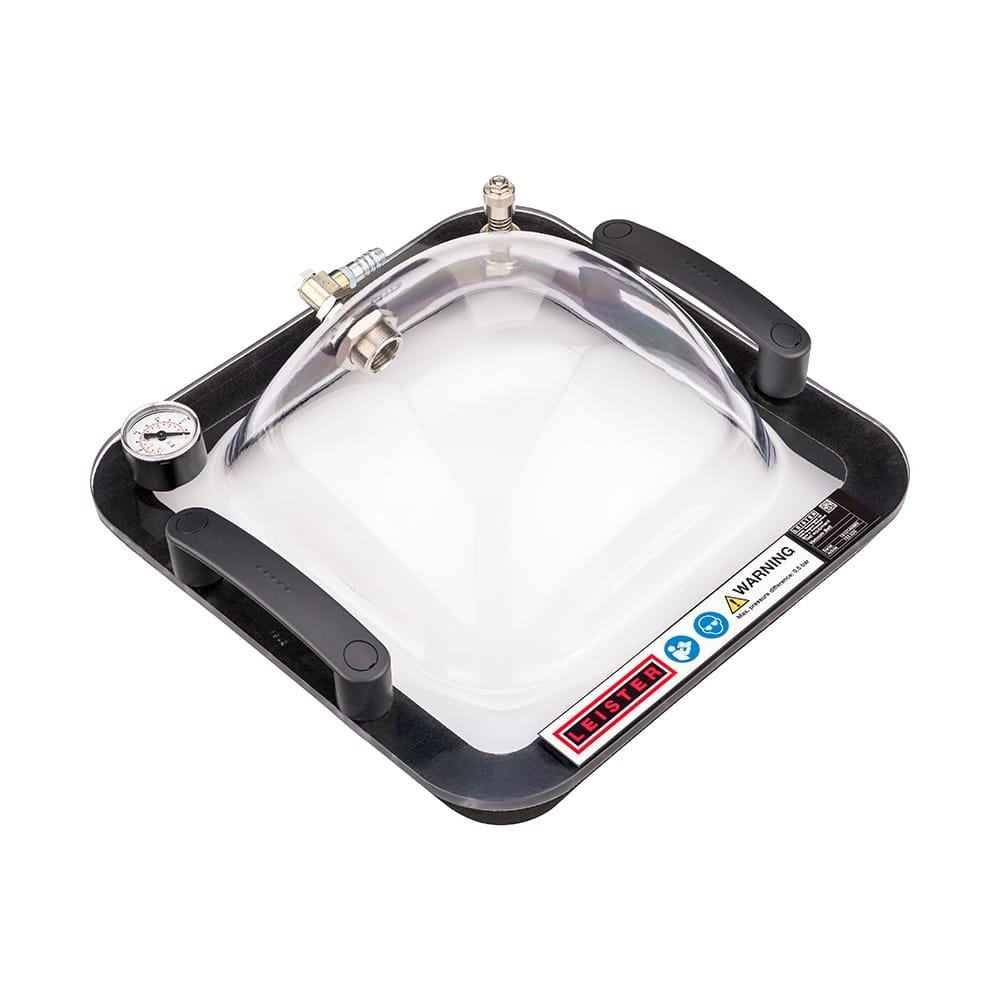
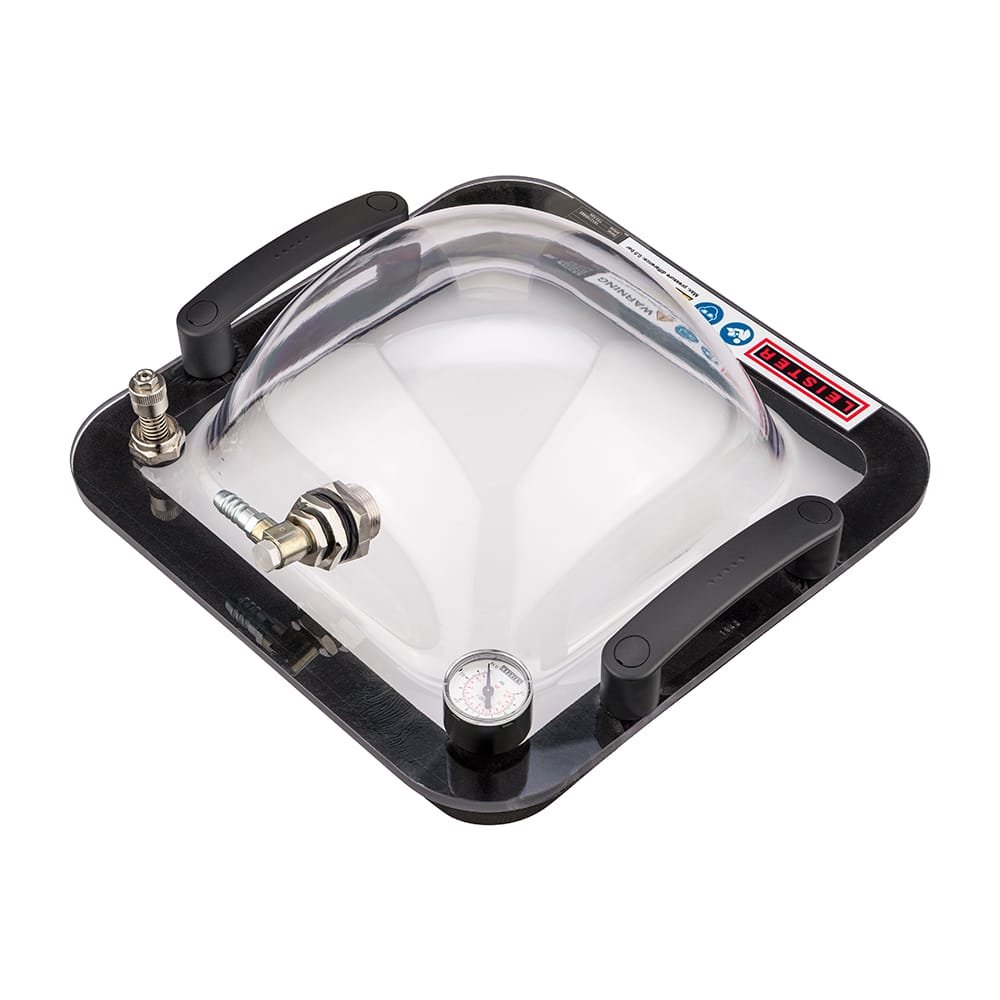
Manufactured from robust, impact-resistant plastic with a long-life seamless seal, the VACUUM BELL applies up to 0.5 bar of vacuum to weld seam sections and detects any leak path through pressure drop on the bar and inHg manometer - identifying weld seam irregularities before backfill, concrete placement, or service commencement makes remediation impractical or impossible.
- Square 320 x 320 mm vacuum bell for corner-reaching overlap weld seam leak testing
- Maximum vacuum of 0.5 bar with manometer scaled in bar and inHg
- Thumb-pressure venting for simple single-operator operation
- Robust, impact-resistant plastic construction with seamless long-life seal
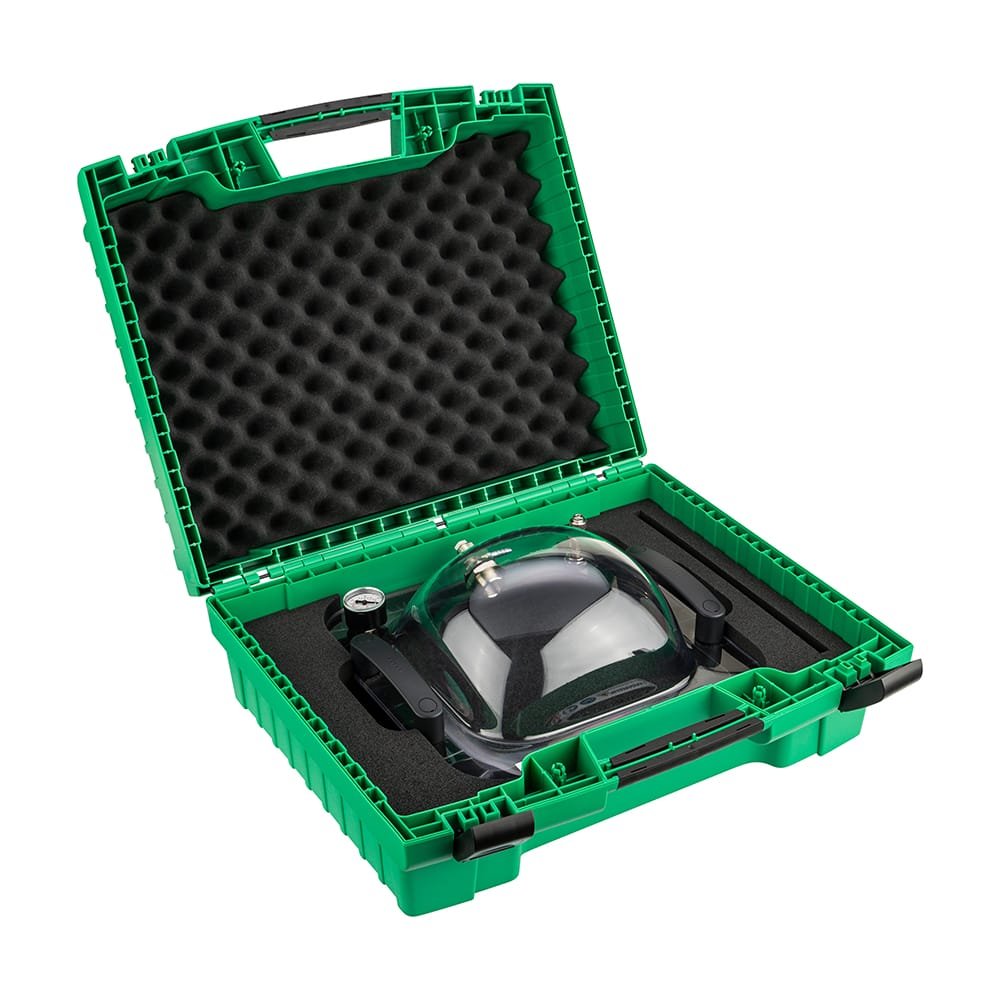
- Lightweight at 1.5 kg for site portability across large geomembrane installations
- Designed for use with the Leister VACUUM PUMP for vacuum generation
- Used in landfill, tunnel, and civil geomembrane construction quality assurance
- Manufactured in Switzerland

Like this product?
Speak to an Expert!
08:00 AM - 08:00 PM
Leister VACUUM BELL - Square Vacuum Testing Bell for Non-Destructive Geomembrane Weld Seam Leak Detection
The Leister VACUUM BELL is a 320 x 320 mm square vacuum leak testing device applying up to 0.5 bar of vacuum to geomembrane overlap weld seams and application seams – manufactured from robust, impact-resistant plastic with a seamless long-life seal, thumb-pressure vent operation, and a bar and inHg manometer for pressure monitoring – designed for non-destructive weld seam leak detection in landfill containment, tunnel waterproofing, and civil geomembrane construction quality assurance programmes.
Non-Destructive Weld Seam Leak Testing for Geomembrane Containment and Waterproofing Systems
The weld seams of a geomembrane installation – whether on a landfill containment liner, a tunnel waterproofing system, or a civil environmental barrier – represent the most vulnerability-critical element of the complete waterproofing or containment system. A fused, defect-free weld seam performs indefinitely under service loading. A weld seam with an irregularity – a missed fusion zone, a through-thickness void, or a pinhole at the seam edge – will eventually allow liquid to migrate through the liner at the defect location, compromising the containment or waterproofing function that the entire installation was designed to provide.
Detecting those irregularities before installation acceptance – before backfill covers the landfill liner, before structural concrete is cast over the tunnel waterproofing membrane, before the geomembrane enters hydraulic service – is the quality assurance obligation that project specifications, environmental regulations, and engineering responsibility impose on the installation contractor and the supervising engineer. The VACUUM BELL provides the practical means to discharge that obligation across the full seam network of a geomembrane installation: a portable, purpose-designed vacuum testing instrument that any quality inspector can carry to any seam location on the installation, apply to each seam section in sequence, and use to confirm or challenge seam integrity before the point of no practical return. For civil engineers, quality control teams, and geomembrane installation contractors across Oman and the GCC, the VACUUM BELL is the instrument that turns the quality assurance obligation into a systematic, achievable, and documented field testing programme.
VACUUM BELL Testing Capabilities and Field Quality Assurance Features
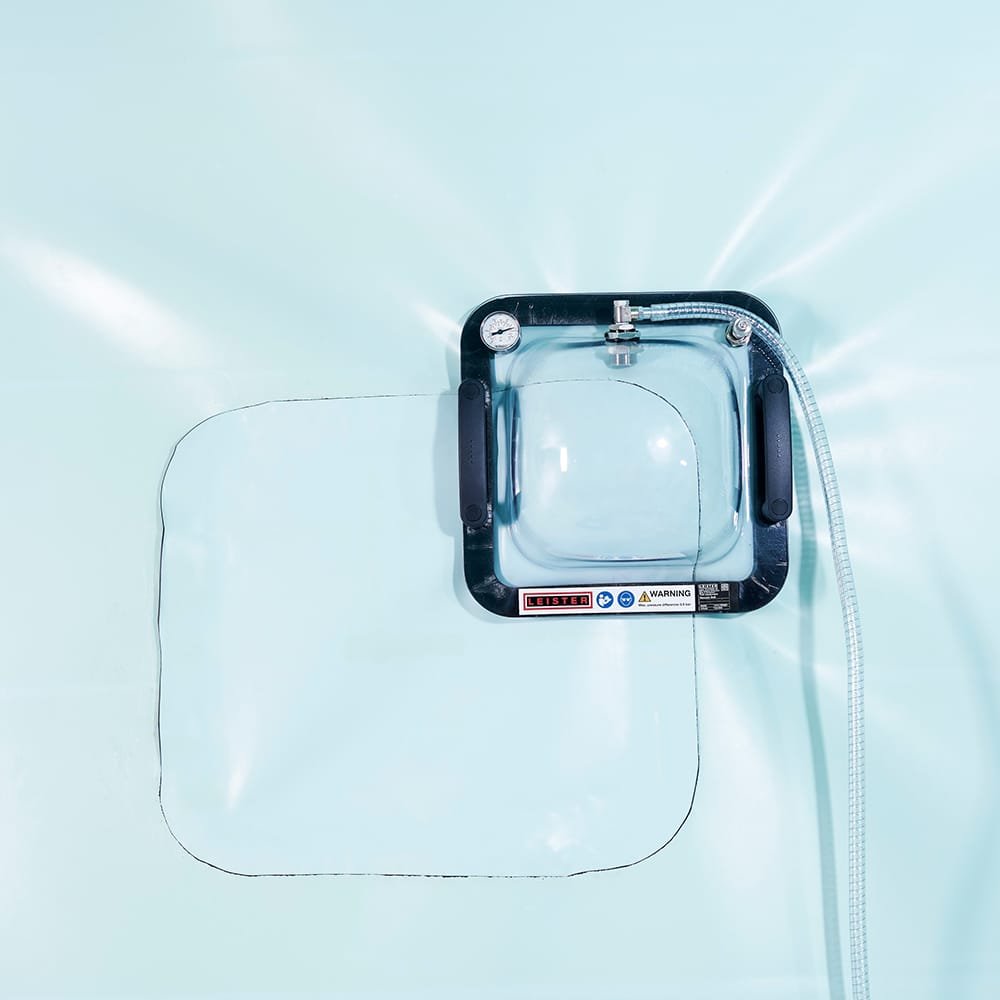
- Square 320 x 320 mm Geometry for Complete Corner Coverage: The square footprint of the VACUUM BELL is a deliberate engineering choice rather than a conventional form. Round vacuum bells cannot seal against the 90-degree corners of weld seam intersections, parapet junctions, and detail transitions – the points where liner continuity is most difficult to achieve and where seam irregularities are most consequential if left undetected. The 320 x 320 mm square form reaches into corners that round bells bypass, enabling systematic vacuum testing of the complete seam network including the corner sections that would otherwise require alternative testing methods or remain untested.
- 0.5 Bar Maximum Vacuum for Leak Detection Sensitivity: The VACUUM BELL applies up to 0.5 bar of vacuum to the weld seam section covered by the bell footprint – creating a differential pressure across the seam that will draw any existing leak path open and cause measurable pressure drop on the manometer. At 0.5 bar, the test is sensitive to the fine void paths and partial fusion zones that represent genuine seam quality defects while not overstressing the membrane material at the seam edges.
- Bar and inHg Dual-Scale Manometer: The integrated manometer reads in both bar and inHg, accommodating the pressure units used in different project quality assurance standards and enabling the test result to be read and recorded in the unit required by the project QA plan without unit conversion or separate measurement equipment – relevant on internationally specified civil construction projects in Oman and the GCC where both metric and imperial pressure units appear in project documentation.
- Thumb-Pressure Vent for Simple Single-Operator Operation: The vent valve opens under thumb pressure, releasing the vacuum at the end of each test position and allowing the bell to be repositioned to the next seam section – the entire test sequence of position, apply vacuum, read manometer, and vent is a single-operator operation that can be performed continuously along the seam without assistance, making systematic full-coverage testing of large geomembrane installations practically achievable within the time available during installation programme quality inspection windows.
- Robust Impact-Resistant Plastic Construction: The bell body is manufactured from robust, impact-resistant plastic rated for the repeated handling, surface contact, and site environmental conditions that active geomembrane installation quality inspection involves – carrying the device across rough substrate surfaces, setting it down on the membrane repeatedly across hundreds of test positions, and exposing it to the UV, temperature, and dust conditions of outdoor civil project sites across Oman and the GCC.
- Seamless Long-Life Seal for Consistent Vacuum Integrity: The perimeter seal of the VACUUM BELL is designed as a seamless, continuous element with extended service life – maintaining the vacuum-tight contact between the bell and the membrane surface that is necessary for valid test results across the full operational life of the device without the seal join failures that interrupt vacuum retention and invalidate test results during active inspection programmes.
- 1.5 kg Portable Weight for Large Installation Coverage: At 1.5 kg and 150 mm height, the VACUUM BELL is carried and positioned by hand across the full extent of a geomembrane installation – including on sloped embankment faces, around reservoir perimeters, and across large flat liner areas – without the weight and handling difficulty that would limit the number of test positions achievable in a single inspection session or require two-person operation.
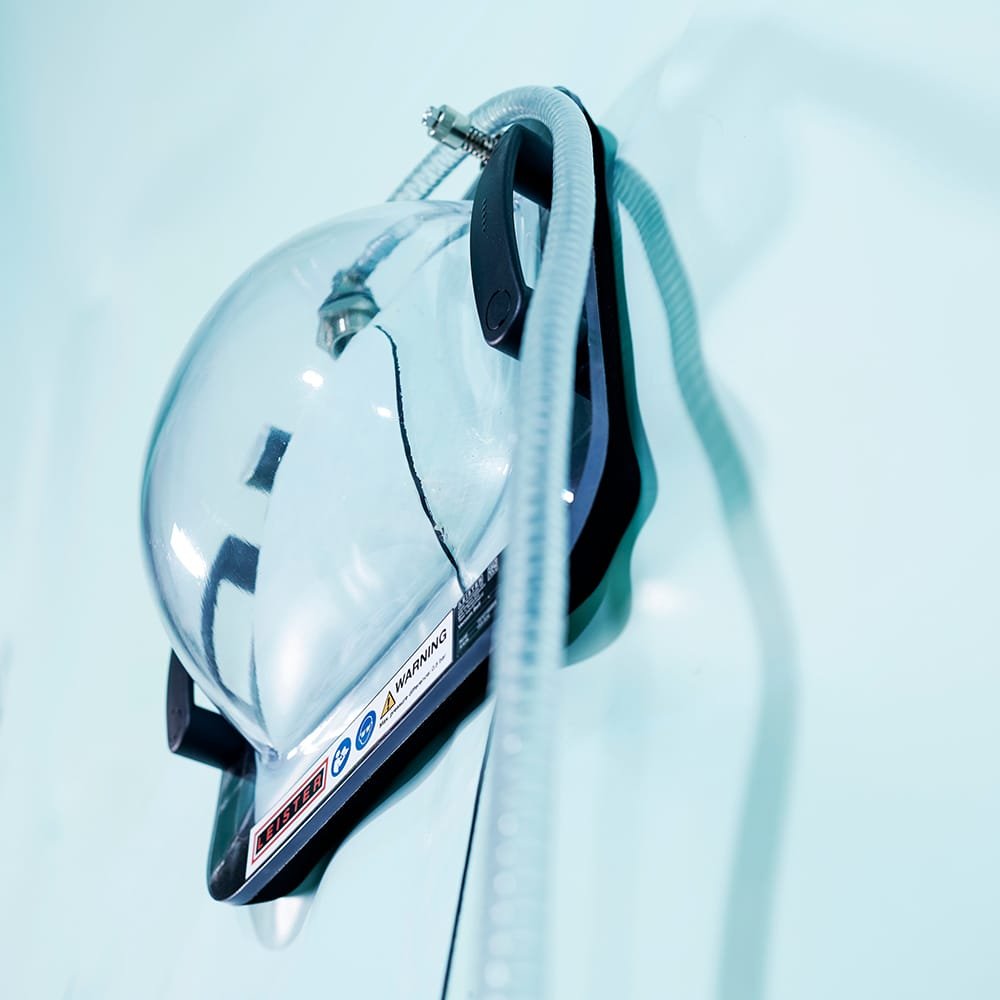
- Designed for Use with Leister VACUUM PUMP: The vacuum required for leak testing is ideally generated using the Leister VACUUM PUMP, which connects to the VACUUM BELL to apply and maintain the required vacuum level without manual pumping by the operator – enabling the test sequence to be conducted efficiently and to consistent vacuum levels across all test positions throughout the inspection programme.
Geomembrane Weld Seam Vacuum Testing Applications in Civil and Environmental Engineering
- Landfill Containment Liner Overlap Seam Leak Testing: Applies vacuum to overlap weld seam sections in primary and secondary HDPE and PE geomembrane liner systems on municipal solid waste and hazardous waste landfill cells – detecting seam irregularities at every test position before backfill placement makes liner seam access for repair welding impossible, and generating the seam-by-seam quality verification record that environmental regulatory acceptance of the liner system requires.
- Tunnel Waterproofing Membrane Weld Seam Verification: Tests overlap weld seams in tunnel waterproofing membrane installations – where the square geometry allows testing to continue through the corner seams at tunnel invert-to-haunch transitions, and where seam irregularities identified before structural concrete casting can be repaired by the membrane installer rather than remaining as latent defects within the permanent tunnel waterproofing system.
- Civil Geomembrane Corner and Detail Seam Testing: The square 320 x 320 mm footprint enables vacuum testing of seam corners, intersections, and detail transitions in reservoir liners, canal waterproofing, and civil containment geomembrane installations – the specific seam locations where round vacuum bells cannot maintain a complete perimeter seal and where testing coverage has historically required manual alternative methods or acceptance of incomplete seam verification.
- Application Seam Quality Verification on Civil Construction Sites: Tests application seams – the field welds between geomembrane panels at non-standard locations including penetration surrounds, sump details, and perimeter terminations – where the small seam area and complex geometry make the square bell format and thumb-pressure vent operation more practical than larger or more complex testing equipment for the detail-by-detail inspection work that comprehensive quality assurance requires.
- Pre-Acceptance Quality Inspection on Geomembrane Installations: Supports the systematic pre-handover quality inspection programme on geomembrane liner installations across Oman and the GCC – providing the weld seam verification instrument that quality engineers and environmental certifiers use to confirm seam integrity section by section before formal acceptance of the installed liner system and before the installation is subjected to the service loading conditions that would make a latent seam defect consequential.
Leister VACUUM BELL – Available Through iBuild, Authorised Leister Distributor in Oman
iBuild is an authorised Leister distributor in the Sultanate of Oman, providing civil engineering contractors, geomembrane installation teams, quality control engineers, and environmental project managers with direct access to the VACUUM BELL alongside the compatible Leister VACUUM PUMP and the full range of Leister geomembrane quality assurance instruments – including the Leak Tester for test channel pressure testing and the EXAMO series for destructive peel and tensile testing. As a manufacturer-authorised technical partner, iBuild supports instrument selection for specific geomembrane testing programme requirements and provides the technical guidance that ensures the VACUUM BELL is correctly applied within the project’s weld seam quality assurance framework.
For civil engineering contractors, geomembrane installation teams, and quality assurance engineers across Oman and the GCC requiring a robust, portable, corner-reaching vacuum testing instrument for non-destructive weld seam leak detection on landfill, tunnel, and civil geomembrane installations, iBuild is the authorised local source for the Leister VACUUM BELL – backed by manufacturer authority and in-country technical support.
Technical Data
| Article Number | 153.026 |
| Max. Vacuum | 0.5 bar |
| Manometer Scale | bar, inHg |
| Length | 320 mm |
| Width | 320 mm |
| Height | 150 mm |
| Weight | 1.5 kg |
| Country of Origin | Switzerland |

Like this product?
Speak to an Expert!
08:00 AM - 08:00 PM
Recommended for you
Popular Brands
View All